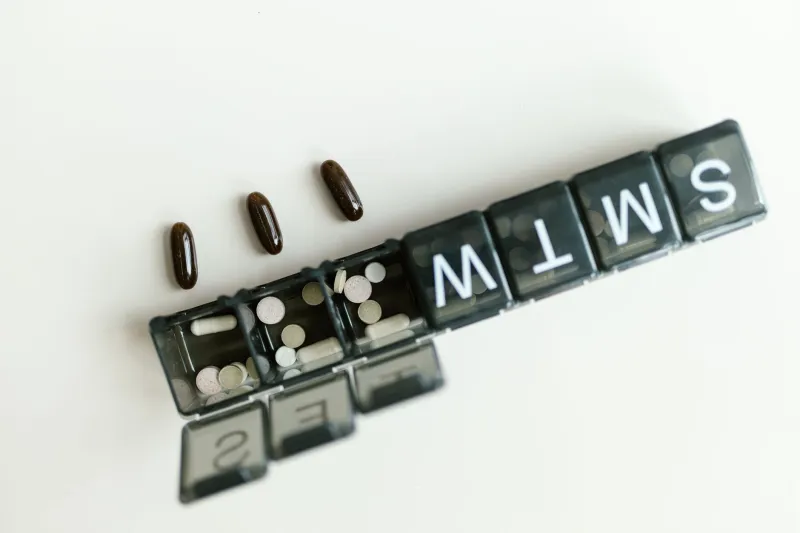
Flooding Your System With Vitamins Might Be Quietly Disarming Your Immune System

There's a deeply American instinct to go bigger. Bigger portions, bigger ambitions, bigger supplement stacks. And when cold and flu season rolls around, a lot of us start doubling up on vitamin C, zinc, and D3 like we're trying to build a fortress. It feels responsible. Proactive, even.
But a growing body of research is raising an uncomfortable question: what if loading up on immune-support supplements is actually making your immune system lazier — and less prepared to fight when it counts?
This isn't a fringe idea anymore. It's becoming one of the more interesting debates in nutritional immunology, and it has real implications for how you think about your daily supplement routine.
Your Immune System Is Supposed to Work for Its Food
Here's the thing about your immune system that doesn't get enough airtime: it's adaptive. It responds to its environment. It learns. And like any system that learns, it can be shaped — for better or worse — by the inputs it receives consistently over time.
When your body gets a steady, abundant supply of immune-relevant nutrients like vitamin C, vitamin D, zinc, and selenium, it can begin to recalibrate its baseline activity. In immunology, this concept touches on something called immune tolerance — the mechanisms by which your immune system learns what to react to and how aggressively.
Nutrients aren't passive passengers. Vitamin D, for instance, directly regulates gene expression in immune cells. It can modulate both the innate and adaptive immune response, which is why it gets so much attention. But modulation is a two-way street. At physiological doses, vitamin D supports healthy immune surveillance. At chronically elevated levels, some research suggests it may tip the balance toward immune suppression — which is actually useful in autoimmune contexts, but potentially counterproductive when you're trying to fight off a pathogen.
The Clinical Picture Is Getting More Complicated
A 2020 review published in Nutrients examined the dose-dependent effects of several key micronutrients on immune function and found a consistent pattern: deficiency impairs immunity, adequacy supports it, and excess can disrupt it. The relationship isn't linear — it's more like an inverted U. There's a peak, and once you go past it, the benefits don't just plateau. They can actually reverse.
Zinc is a textbook example. It's one of the most popular immune supplements on the market, and for good reason — it plays a critical role in the development and function of immune cells. But studies have shown that excessive zinc intake can actually inhibit the activity of natural killer (NK) cells and interfere with copper absorption, which has its own downstream effects on immune enzyme function. A 2021 paper in the Journal of Nutritional Biochemistry flagged that long-term high-dose zinc supplementation was associated with measurable changes in immune cell populations in older adults.
Vitamin C is another one people tend to mega-dose. The logic seems airtight — it's an antioxidant, it supports white blood cell production, it's water-soluble so you'll just pee out the excess. Mostly true. But very high doses have been shown to act as a pro-oxidant in certain cellular environments, which complicates the picture significantly. And when your body is continuously flooded with exogenous antioxidants, there's emerging evidence it may downregulate its own endogenous antioxidant production — essentially outsourcing a job it should be doing itself.
The Concept Nobody Talks About: Nutrient-Induced Immune Complacency
There's no single clinical term for it yet, but researchers are increasingly interested in what happens when the immune system operates in a chronically nutrient-saturated environment. Think of it like this: if you always have a full tank of gas and never have to worry about running low, you stop paying attention to fuel efficiency. Your immune system may do something analogous.
When immune cells consistently receive more than they need to function, the signaling pathways that trigger robust immune responses may become less sensitive. Your body is remarkably good at conservation — it doesn't like to run systems at full capacity if it doesn't have to. If it perceives that it has abundant resources and no immediate threat, it may dial back the readiness of certain immune functions.
This is speculative in parts, but it's grounded in established principles of biological feedback and homeostasis. And it's enough of a signal that researchers are calling for more longitudinal studies on the long-term immunological effects of routine high-dose supplementation in otherwise healthy adults.
So What's the Right Amount?
This is where things get genuinely personal, which can be frustrating when you're looking for a clean answer. The optimal supplementation threshold isn't the same for a 28-year-old woman in Phoenix as it is for a 55-year-old man in Minnesota with limited sun exposure and a plant-heavy diet.
That said, here are some practical principles worth building your approach around:
Start with testing, not guessing. Before you stack up on vitamin D or zinc, get your baseline levels checked. A simple blood panel can tell you whether you're actually deficient, sufficient, or already in excess. Supplementing from a place of data is always smarter than supplementing from a place of anxiety.
Respect the Tolerable Upper Intake Levels (ULs). The NIH sets these for a reason. They're not arbitrary — they represent the threshold above which risk of adverse effects increases. For zinc, that's 40mg/day for adults. For vitamin D, it's 4,000 IU/day, though many practitioners work within a range below that for maintenance. These aren't targets; they're ceilings.
Cycle your higher-dose protocols. If you're taking elevated amounts of any immune-relevant nutrient during a specific period — say, during travel or at the start of winter — consider returning to maintenance doses afterward. Sustained mega-dosing is where the risk profile changes.
Let food do some of the work. Whole foods deliver nutrients in forms and ratios that your body has been processing for millennia. A diet rich in colorful vegetables, quality proteins, and healthy fats provides a matrix of cofactors that supplements alone can't fully replicate. Think of supplements as filling gaps, not replacing the whole system.
Pay attention to how you actually feel. If you've been on a heavy supplement regimen for months and you're still getting sick regularly, that's data. It might be worth backing off and seeing whether a more moderate approach changes your pattern.
The Smarter Supplement Philosophy
At VisPills, we talk a lot about optimization — and genuine optimization is rarely about maximum. It's about finding the dose that works with your biology, not against it. Your immune system is one of the most sophisticated defense networks in the known universe. It doesn't need to be overwhelmed with resources. It needs to be supported thoughtfully.
The supplement paradox is real: the very pills you're taking to stay healthy might be nudging your immune system toward a kind of comfortable underperformance. That's not a reason to abandon your supplement routine. It's a reason to get smarter about it.
More isn't always more. Sometimes the most powerful thing you can do for your health is simply give your body exactly what it needs — and trust it to handle the rest.