One and Done? Why Dumping All Your Supplements Into Breakfast Is Leaving Results on the Table
Morning routines are sacred in America. Coffee, maybe a quick scroll through your phone, and then — if you're health-conscious — a small pile of capsules and tablets washed down before you head out the door. It's convenient. It's consistent. And according to a growing body of nutritional research, it might be quietly undermining everything you're trying to accomplish with those supplements.
The problem isn't dedication. It's biology. Your body processes nutrients through a surprisingly competitive system, and when you flood it with everything at once, some nutrients win and others lose. Understanding who wins — and who gets left behind — is the first step to actually getting your money's worth.
Your Gut Has a Capacity Problem
Absorption isn't unlimited. Many vitamins and minerals share the same transport proteins in your intestinal lining, meaning they're essentially competing for the same boarding gate. When two nutrients require identical carriers, the one in higher concentration tends to crowd out the other.
Calcium and iron are the classic example. Both rely on overlapping intestinal transport mechanisms, and studies consistently show that taking high-dose calcium alongside iron can reduce iron absorption by as much as 50 to 60 percent. For anyone managing low iron levels — a staggeringly common issue, particularly among women in the US — that's not a minor inconvenience. That's half your supplement going to waste.
Zinc and copper tell a similar story. Long-term zinc supplementation without attention to timing can actually deplete copper levels over time because the two minerals compete so aggressively for absorption. Neither one is doing its full job when they're always thrown into the ring together.
Fat-Soluble vs. Water-Soluble: The Meal Timing Divide
Not all supplements need food the same way — or at all. This distinction alone can dramatically change when certain things should hit your routine.
Fat-soluble vitamins — A, D, E, and K — require dietary fat to be absorbed properly. Taking vitamin D on an empty stomach or with a fat-free breakfast isn't just suboptimal; it's a reliable way to tank your absorption numbers. Research published in the Journal of the Academy of Nutrition and Dietetics found that participants who took vitamin D with a high-fat meal absorbed significantly more than those who took it without fat. If your morning routine involves a piece of dry toast or a fat-free yogurt, your vitamin D might be passing through with very little uptake.
Water-soluble vitamins like vitamin C and the B-vitamin family are more forgiving — they don't need fat, and they're generally absorbed quickly. But that doesn't mean they're without timing considerations. High-dose vitamin C taken alongside B12, for instance, has been shown in some studies to reduce B12 bioavailability. And magnesium, one of the most popular supplements on the market right now, is often better tolerated and absorbed when taken in the evening rather than the morning, partly because it can cause digestive discomfort and partly because its relaxation-promoting effects align naturally with winding down.
The Combinations That Actually Work Better Together
Timing isn't only about separation — some nutrients genuinely amplify each other when paired correctly.
Vitamin D and K2 are a well-documented team. D3 increases calcium absorption, and K2 helps direct that calcium into bones rather than arterial walls. Taking them together, ideally with a fat-containing meal, makes physiological sense. Similarly, vitamin C meaningfully enhances non-heme iron absorption (the kind found in plant foods and most supplements), so pairing iron with a vitamin C source is a legitimate strategy rather than supplement-industry folklore.
Magnesium and vitamin D also have a cooperative relationship. Magnesium is required to convert vitamin D into its active form, so if you're deficient in magnesium, even a high vitamin D dose may underperform. Knowing this, some people choose to take both — but at different times of day to avoid the digestive load of too many supplements at once.
Building a Schedule That Fits Real Life
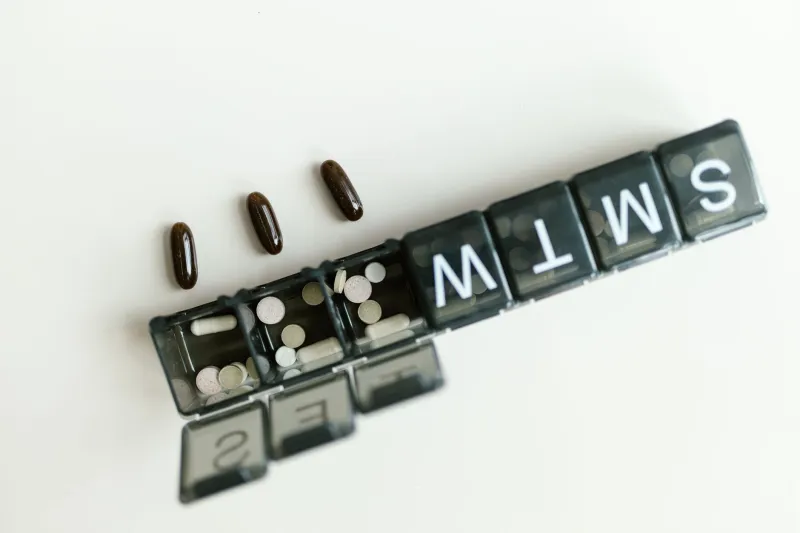
Here's where the rubber meets the road. Nutrient timing research is compelling, but it doesn't mean you need to be setting seven alarms and carrying a supplement organizer everywhere you go. The goal is a realistic framework, not a part-time job.
Morning with breakfast (include healthy fat): Fat-soluble vitamins — D3, K2, vitamin A, vitamin E — belong here. A meal with eggs, avocado, nut butter, or olive oil creates the absorption environment these nutrients need.
Midday or with lunch: If you're taking iron, this is often the sweet spot — away from your morning calcium if you take that, and paired with a vitamin C source like a glass of OJ or a supplement that includes C alongside the iron.
Evening with dinner: Calcium (if taken separately from iron), magnesium, and zinc can work well here. Some people find magnesium especially useful at night, given its association with muscle relaxation and sleep quality. If you're splitting a calcium dose — which is advisable for doses above 500mg since the body can only absorb so much at once — dinner is a natural second window.
Anytime, with or without food: Most B-vitamins and vitamin C can generally be taken flexibly, though some people find high-dose B-vitamins more comfortable with food to avoid nausea.
The Personalization Factor
No schedule works the same for everyone, and that's not a cop-out — it's genuinely true. Your specific health goals matter here. Someone focused on athletic recovery has different priority nutrients than someone managing low iron or prioritizing bone density in their 50s. Your diet matters too: if you're eating a fatty breakfast every morning, your fat-soluble vitamin absorption is probably fine right at that meal. If you're intermittent fasting and skipping breakfast entirely, you'll need to rethink where those fat-soluble vitamins land.
Gastrointestinal sensitivity is another real variable. Some people experience nausea from certain supplements on an empty stomach — zinc is a common culprit — and for those folks, consolidating more supplements into meals isn't just convenient, it's necessary.
The bottom line isn't that your morning routine is wrong. It's that a little strategic reshuffling — moving a few things to lunch or dinner, pairing fat-soluble vitamins with fat, separating your calcium from your iron — can meaningfully improve what your body actually absorbs. Supplements are an investment. The timing is just making sure that investment pays off.