When More Is Actually Less: How Your Multivitamin Could Be Quietly Canceling Out Your Other Supplements
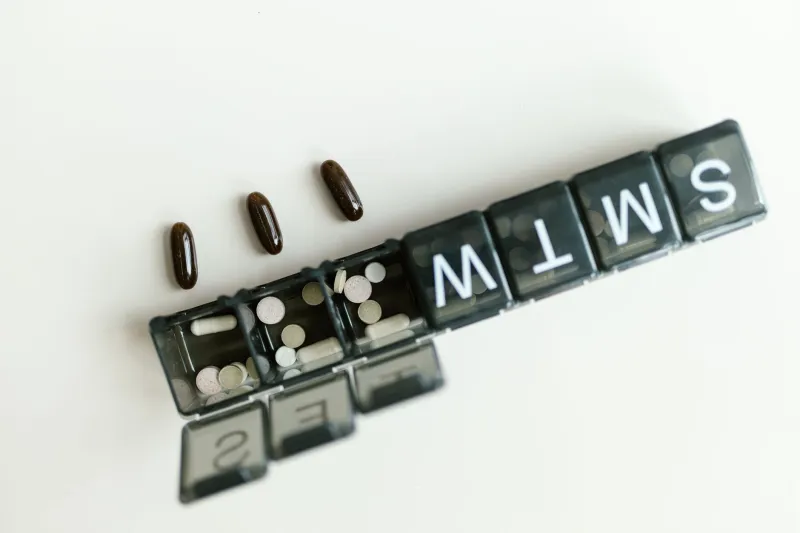
There's a certain satisfaction in laying out your morning supplement lineup. Multivitamin — check. Zinc — check. Iron — check. Magnesium — check. You've done the research, spent the money, and built what looks like a solid nutritional foundation. The only problem? Some of those pills are essentially arm-wrestling each other inside your digestive tract, and the nutrients you're specifically targeting might be losing the fight.
This isn't about bad supplements or cheap formulations. It's about biology — specifically, the surprisingly limited number of transport proteins and absorption channels your gut uses to pull nutrients out of what you eat and swallow. When two or more micronutrients show up at the same receptor at the same time, your body has to pick a winner. And that winner isn't always the one you're rooting for.
The Absorption Bottleneck Nobody Talks About
Your small intestine is remarkable, but it's not unlimited. Nutrient absorption depends heavily on specialized transporter proteins — molecular gatekeepers that ferry specific compounds across the intestinal wall and into your bloodstream. The catch is that many of these transporters aren't picky about which nutrient they grab. They'll take whichever one shows up in the highest concentration or has the strongest binding affinity.
This creates what researchers call competitive inhibition — essentially a nutrient traffic jam where one micronutrient physically blocks another from getting through. The more crowded the situation, the worse the congestion.
Your multivitamin, by design, dumps a wide range of micronutrients into your system all at once. That's fine in isolation. But if you're also taking targeted single-nutrient supplements at the same time, you're essentially flooding those transporters with competing passengers.
The Biggest Rivalries in Your Supplement Stack
Iron vs. Zinc (and Calcium vs. Both)
This is one of the most well-documented conflicts in nutrition science. Iron and zinc share the same divalent metal transporter (DMT1) in the gut. When both are present in meaningful quantities at the same time, they compete aggressively. Studies have shown that high-dose iron supplementation can reduce zinc absorption by up to 56% — and the reverse is also true. If your multivitamin contains iron and you're taking a separate zinc supplement for immune support or skin health, you may be significantly shortchanging yourself on the zinc front.
Calcium adds another wrinkle. It competes with both iron and zinc, and since many multivitamins contain substantial calcium alongside these two, the three-way competition can be particularly brutal. Americans who take calcium supplements for bone health on top of an iron-containing multivitamin are a prime example of a well-intentioned stack quietly underperforming.
Magnesium vs. Calcium
These two are often marketed together as a duo, and they do have important biochemical relationships — but they also compete at the intestinal level. Both use similar transport mechanisms, and high calcium intake has been shown to reduce magnesium absorption. If you're taking magnesium specifically to support sleep, muscle recovery, or stress response, pairing it with a calcium-heavy multivitamin in the same sitting could be blunting its effect.
Copper vs. Zinc
Zinc and copper have a well-established antagonistic relationship. Long-term, high-dose zinc supplementation is actually a recognized cause of copper deficiency in clinical settings. Your multivitamin likely contains copper to offset this — but if you're layering additional zinc on top, you may be tipping the balance in ways that work against you over time.
Fat-Soluble Vitamins Competing for Absorption
Vitamins A, D, E, and K are all fat-soluble, meaning they rely on dietary fat and bile for absorption. They also share some overlapping pathways. High-dose vitamin E, for instance, can interfere with vitamin K activity. And since many multivitamins contain all four, adding a standalone vitamin D or K2 supplement to the mix — without adjusting timing — can create subtle but real absorption friction.
Why Your Multivitamin Isn't the Enemy
Before you toss your multi, it's worth understanding what it's actually designed to do. A quality multivitamin is built to address broad nutritional gaps — the kind that show up when your diet isn't covering the basics. It's a baseline, not a precision tool. The problem isn't the multivitamin itself; it's the assumption that adding targeted supplements on top of it, at the same time, automatically produces additive benefits.
In many cases, it doesn't. And in some cases, it actively reduces the effectiveness of your more specific investments.
A Practical Framework for Fixing Your Stack
The good news is that you don't need to completely rebuild your supplement routine. Strategic timing is often all it takes to dramatically reduce competitive absorption.
Step 1: Identify your priority nutrients. What are you actually trying to accomplish? Better sleep? Stronger immunity? Improved energy? Pick the one or two nutrients you're most intentionally supplementing for and treat those as your anchors.
Step 2: Separate your multi from your single-nutrient supplements. As a general rule, give your multivitamin and any targeted supplements at least two hours of separation. This won't eliminate competition entirely, but it significantly reduces the head-to-head absorption conflict at the transporter level.
Step 3: Watch the iron-zinc-calcium triangle. If your multivitamin contains iron, take it at a different time than your zinc or calcium supplements. If you're supplementing iron therapeutically (for anemia or low ferritin), consider taking it on an empty stomach, away from everything else, with a source of vitamin C to enhance absorption.
Step 4: Take fat-soluble vitamins with a fat-containing meal. All four fat-soluble vitamins (A, D, E, K) absorb better with dietary fat present. If you're taking a standalone D3 or K2, pair it with a meal that contains some healthy fat — avocado, olive oil, nuts — rather than swallowing it with coffee on an empty stomach.
Step 5: Reconsider whether you need both. Sometimes the right answer is to drop the standalone supplement and rely on your multivitamin for that nutrient, or vice versa. If your multi already contains 100% of your daily zinc, do you actually need a separate zinc capsule? Running the numbers on your total intake across all products can reveal surprising redundancies.
The Bottom Line
Supplements work best when your body can actually absorb and use them — and that requires thinking about timing and combinations, not just ingredients and dosages. Your multivitamin is a valuable tool, but it's not a free pass to stack everything else on top of it without consequence.
A little strategic spacing goes a long way. And when you stop letting your supplements fight each other, you might be surprised at how much better your carefully chosen stack actually performs.