Does It Really Matter When You Take Your Supplements? We Checked the Science So You Don't Have To
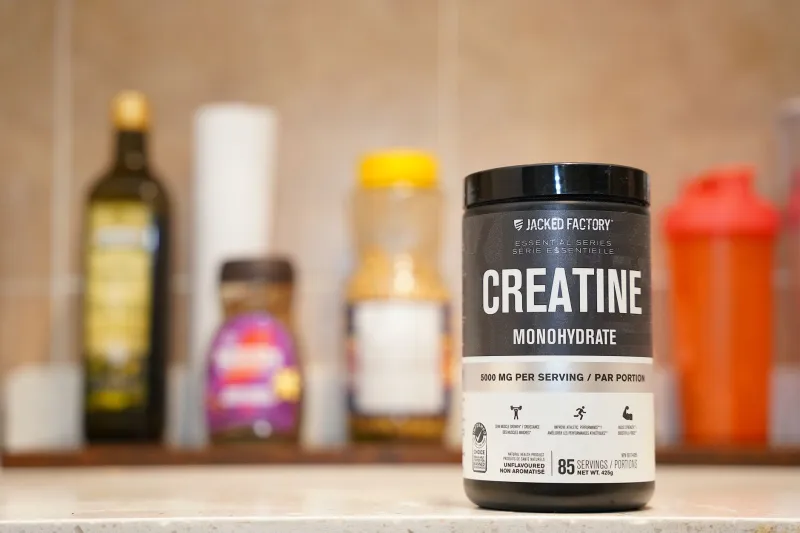
Scroll through any supplement brand's website long enough and you'll start to feel like you're defusing a bomb. Take this one before 8 a.m. Take that one only with food. This capsule needs an empty stomach. That powder works best post-workout, within a 30-minute anabolic window. Miss the window? Apparently you've wasted your money.
It's a lot. And it raises a legitimate question: how much of this precision timing advice is grounded in actual science — and how much is just a clever way to make a product feel more sophisticated than it is?
We dug into the research so you don't have to spend your morning cross-referencing pill bottles like you're managing a pharmaceutical logistics operation.
Where Timing Advice Actually Comes From
Not all timing recommendations are invented out of thin air. Some have a real physiological basis. Fat-soluble vitamins — A, D, E, and K — genuinely do absorb better when taken alongside dietary fat. That's basic biochemistry. If you're dry-swallowing a vitamin D capsule on an empty stomach first thing in the morning, you're probably not getting full absorption.
Similarly, magnesium taken in the evening has some research support — not because of a mystical nighttime absorption window, but because magnesium can promote muscle relaxation and support sleep quality, making it practically more useful before bed.
Iron is another legitimate case. It absorbs better on an empty stomach, and pairing it with vitamin C enhances uptake. Calcium, on the other hand, competes with iron for absorption, so taking them together is genuinely counterproductive.
These are real, evidence-backed distinctions. The problem is that brands have taken this kernel of scientific truth and extrapolated it into a whole mythology of precision timing that the research simply doesn't support.
The Claims That Don't Hold Up
Here's where things get murky. Many brands now market supplements with language like "formulated for morning activation" or "optimized for your body's evening recovery cycle." It sounds compelling. It's also largely unsubstantiated.
Take B-vitamins. You'll often see them marketed as strictly morning supplements because they "boost energy." The implication is that taking them at night will keep you wired. But B-vitamins don't work like a shot of espresso. They're cofactors in metabolic processes — they help your cells produce energy over time, not on demand. The research doesn't support the idea that taking a B-complex at 7 p.m. is going to disrupt your sleep.
Probiotics are another example. Some brands insist their product must be taken on an empty stomach; others say with meals. The truth? Studies show that most probiotic strains survive stomach acid reasonably well regardless of fed or fasted state, and that survival rates vary far more by strain and formulation than by the specific hour you swallow the capsule.
Protein powder "anabolic windows" are perhaps the most famous example of timing mythology. The idea that you need to consume protein within 30 minutes of a workout or your gains disappear has been largely debunked. Research published in the Journal of the International Society of Sports Nutrition found that total daily protein intake matters significantly more than the precise timing around workouts for most people.
The One Thing That Actually Moves the Needle
Here's what the research consistently shows: consistency beats precision.
For the vast majority of supplements, the most important timing decision you can make is picking a time you'll actually stick to. If you're more likely to remember your multivitamin at dinner than at breakfast, take it at dinner. If you always have a glass of water on your nightstand, that's a great anchor for whatever you're supposed to take in the evening.
This isn't a cop-out — it's biology. Many nutrients require sustained, consistent intake to build and maintain adequate levels in your body. Vitamin D, for instance, is fat-soluble and accumulates over time. Missing your "optimal window" by a few hours is irrelevant when what matters is whether your serum levels are consistently in a healthy range over weeks and months.
The same logic applies to omega-3 fatty acids, zinc, and most herbal supplements. Their effects are cumulative, not instantaneous. A supplement you take reliably every day at a "suboptimal" time will outperform one you take sporadically because you kept missing the brand's prescribed window.
How to Build a Timing Routine That Actually Works
Rather than chasing a brand's ideal schedule, here's a more practical framework:
Anchor supplements to habits you already have. Morning coffee, lunch, dinner, brushing your teeth before bed — these are reliable trigger points. Pairing a new behavior with an existing one is one of the most well-supported habit formation strategies in behavioral science.
Group fat-soluble vitamins with your biggest meal. This is the one timing rule that genuinely earns its keep. Vitamins A, D, E, and K need dietary fat to absorb properly, so taking them alongside a meal that contains some fat makes a real difference. Your biggest meal of the day — whenever that happens to be — is a logical choice.
Separate iron from calcium if you take both. These two compete for the same absorption pathways. Taking them at separate meals is a simple fix that has actual research support behind it.
Take magnesium in the evening if sleep is a goal. Not because of absorption timing, but because its relaxing effects are better utilized at the end of the day.
Beyond those few evidence-backed guidelines? Most of the elaborate timing choreography you see marketed is more about differentiation than science.
The Bottom Line
Supplement timing isn't completely irrelevant — but it's also not the make-or-break factor brands would have you believe. The gap between "optimal timing" and "pretty good timing" is far smaller than the gap between taking something consistently and taking it sporadically.
If a brand's timing instructions are so complicated that they're becoming a barrier to actually using the product, that's worth paying attention to. Real efficacy comes from sustained use, not from nailing a morning window that may have been invented by a marketing team rather than a research team.
Take your supplements. Take them regularly. Pair fat-soluble vitamins with food. Keep iron and calcium separated if you use both. And don't lose sleep over whether your magnesium was 45 minutes late.
Your body is a lot more forgiving than the label suggests.