The Carry-On Pharmacy: Building a Supplement Kit That Survives Real Travel
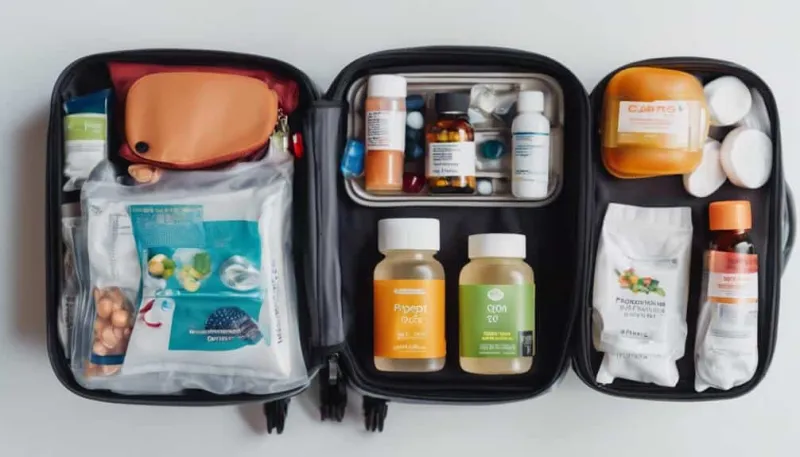
Photo: travel supplement kit packing carry-on airplane, via nomavue.com
There's a special kind of optimism that happens the night before a flight, when you toss an entire supplement cabinet into a Ziploc bag and call it a wellness kit. By day three of the trip, that bag is a sad collection of crushed capsules and a probiotic that's been slow-cooking in a glovebox.
Travel is genuinely hard on your body — disrupted circadian rhythms, dehydrating cabin air, unfamiliar food, and the general stress of middle seats. The right kit can help. The wrong kit becomes expensive landfill in your hotel minibar. Here's how to build one that works.
What Travel Actually Does to Your Nutrient Levels
Jet lag isn't just tiredness — it's a full circadian system reset. Your melatonin production, cortisol curve, and even digestive timing all lag behind the clock on the wall. Meanwhile, cabin humidity around 10-20% (drier than most deserts) dehydrates you, which affects everything from energy to how well your body absorbs water-soluble nutrients.
Add in the fact that most travelers eat worse, move less, and sleep less, and it's no surprise immunity takes a hit right when you're sharing recycled air with 200 strangers.
The Packable List: What Earns Its Spot
Melatonin (0.5–1mg, low dose). The most evidence-backed tool for shifting your body clock. Take it at your destination's bedtime for the first few nights. Skip the 10mg horse pills — research suggests lower doses work just as well for circadian resetting.
Electrolyte packets. Combat the dehydration of a long flight before it becomes a headache. Powder sticks are lighter than bottles and TSA-friendly.
A shelf-stable probiotic (Saccharomyces boulardii). Traveler's diarrhea is real, and this particular strain has solid clinical support for prevention. It survives without refrigeration, unlike many Lactobacillus blends that will be dead by your layover in Denver.
Vitamin D3. If you're flying north in winter or spending a week in conference rooms, you're getting minimal sun. A small bottle of D3 covers the gap.
Magnesium glycinate. For hotel-bed sleep and post-travel muscle tension. Capsules travel better than powders, which clump in humidity.
Ginger capsules or candies. For motion sickness and general stomach rebellion. Cheap, effective, and it doesn't melt.
What to Leave at Home
Fish oil softgels are the first casualty of travel — they soften, leak, and perfume your entire bag. Gummy anything is a disaster in a hot car or overhead bin; they fuse into one mega-gummy. And skip anything requiring refrigeration unless your itinerary genuinely supports a cold chain.
TSA and Packing Strategy, Decoded
Good news: the TSA's 3-1-1 liquids rule doesn't apply to solid supplements. Pills, capsules, and tablets can go in carry-on or checked bags in any quantity. The practical advice:
- Keep them in original containers or clearly labeled organizers. Unlabeled baggies of white capsules invite questions you don't want at 6 a.m. security.
- Carry-on, always. Checked bags get hot, cold, and lost. Your supplements should be in the same bag as your passport.
- Use a weekly pill organizer for anything you take daily — it prevents the "wait, did I take that in the Tokyo airport?" problem across time zones.
- International travelers: check destination country rules before bringing large quantities. Japan and the UAE, among others, restrict certain common US supplements.
The Timing Trick Most Travelers Miss
Here's the pro move: start adjusting before you land. If you're flying east, shift your melatonin and sleep schedule one hour earlier for a couple of days pre-trip. Get bright light in the morning at your destination and avoid it in the evening. Supplements support the transition — but they can't override a circadian system you're actively confusing with 2 a.m. screen time.
Travel doesn't have to derail your routine. Pack light, pack smart, and let the pills do the heavy lifting while you do the sightseeing.